Revive: mamashop
Reimagining the neighbourhood mamashop through a community-driven business model
Descriptors
Mamashops, often located at the void decks of Singapore’s public housing estates, are part of a familiar neighbourhood culture. Their close proximity to residents allows for casual, personal interactions that larger retail formats often lack, making them more than just places of transaction.
However, with urbanisation and shifting consumer habits, mamashops face increasing pressure from convenience stores, supermarkets, and e-commerce platforms that offer wider product ranges, lower prices, and stronger promotional strategies. While mamashops remain physically accessible within residential areas, their long-term sustainability is increasingly challenged by a more competitive retail landscape.
Situated in Pasir Ris, this project explores how the mamashop can be rethought as a community-responsive business. Through field research and resident interviews, the project investigates how a nostalgic neighbourhood retail model might evolve to better serve contemporary needs while preserving its social value.
Understanding the situation it is today
We visited the selected mamashop to document its product range, spatial setup, and overall customer experience. This helped us understand what the business currently offered and where there might be gaps or missed opportunities.
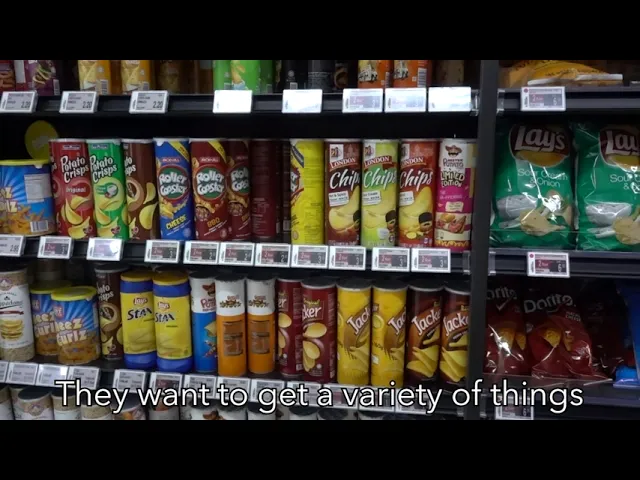
Initial observations of the shop is that there is a lack of price tags display. There is a wide variety of items sold, which makes the shop look more cluttered and messy. Some of the items are placed on the floor instead of on proper shelving racks.

Unpacking the community needs
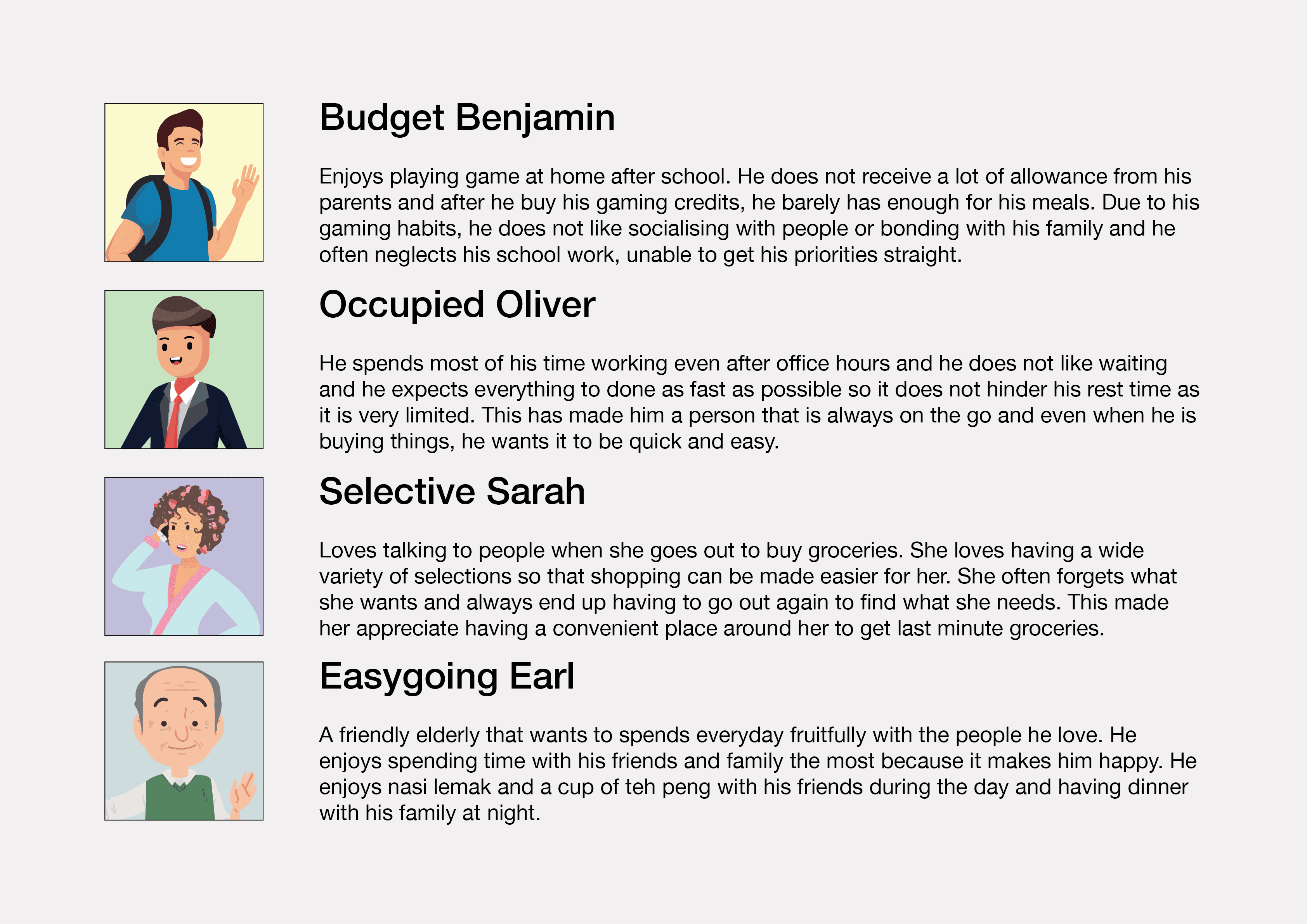
Based on our findings, we identified four groups of people who frequented the shop, namely, Students, Working Adults, Housewives and Elderly. There are common pattern trait that overlaps between the various persona type.
Students / Working Adults / Housewives: Wants things to be done quick and easy
Elderly: Just wants simplicity
Students / Working Adults: Ability to use technology
Housewives / Elderly: Not very exposed to technology
Students / Housewives / Elderly: Pays mainly with cash
Working Adults: Pays mainly with cards
Working Adults / Housewives: Likes variety but only for a specific type of item
Introducing a new business strategy
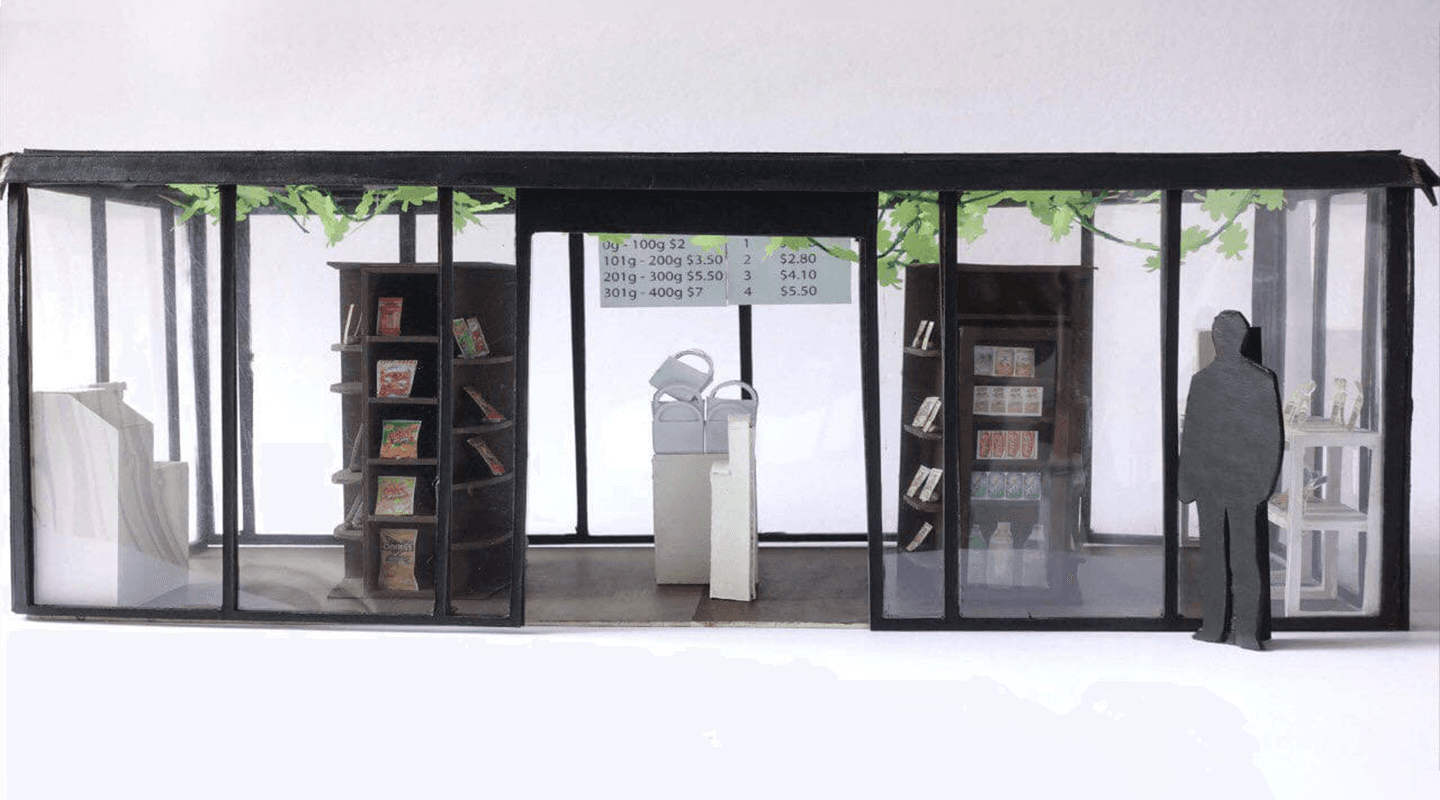
To keep things simple, our proposed concept was to introduce an universal mix and match system based on 2 different pricing tier structure, by weight and by quantity. Items would fall respectively into either of the pricing plan structure, which would be the universal message of this shop brand. From the business perspective, they tend to import items at cheaper, wholesale price while selling it to customers at a higher retail price as well. No doubt that some items would be more expensive than others, this will be leveraging on the overall general profit and loss to average it out.
The reason for having 2 different pricing structure is also to be fair for both businesses and consumers. Items such as tidbits/snacks/chocolates/spices/candies would typically weigh lesser than drinks/ice cream/instant cups. The tier system is also to incentivise and encourage customers to buy more items, which potentially allows for more monetary profit for the business.

Community Genius Loci
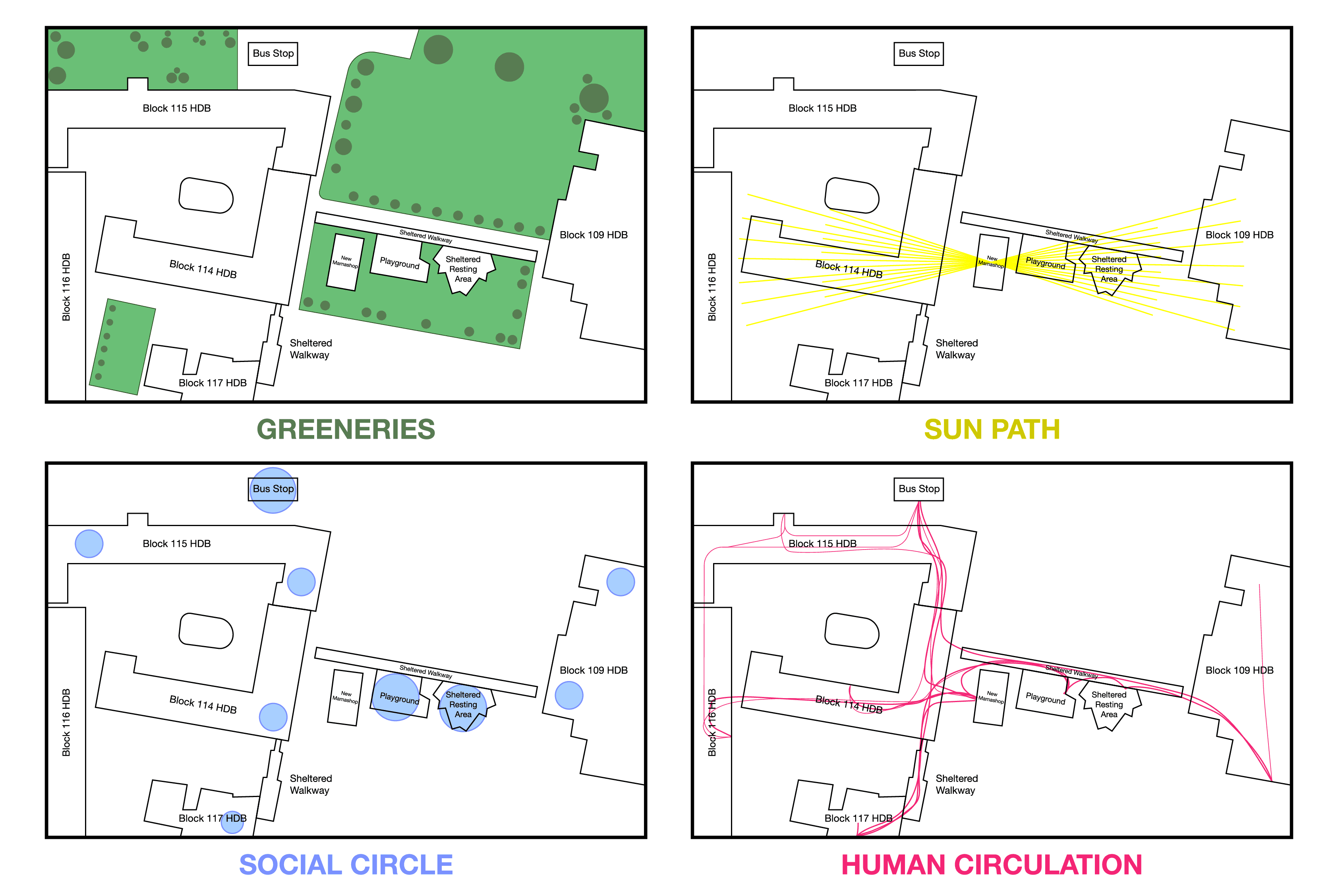
The project was informed by Genius Loci as a way to understand the mamashop beyond its commercial function. This lens helped us recognise its role as a familiar neighbourhood touchpoint embedded within the social and cultural fabric of the housing estate. As a result, our proposal aimed not just to improve the business model, but to do so in a way that respected and retained the shop’s local identity.
Shaping a new shop
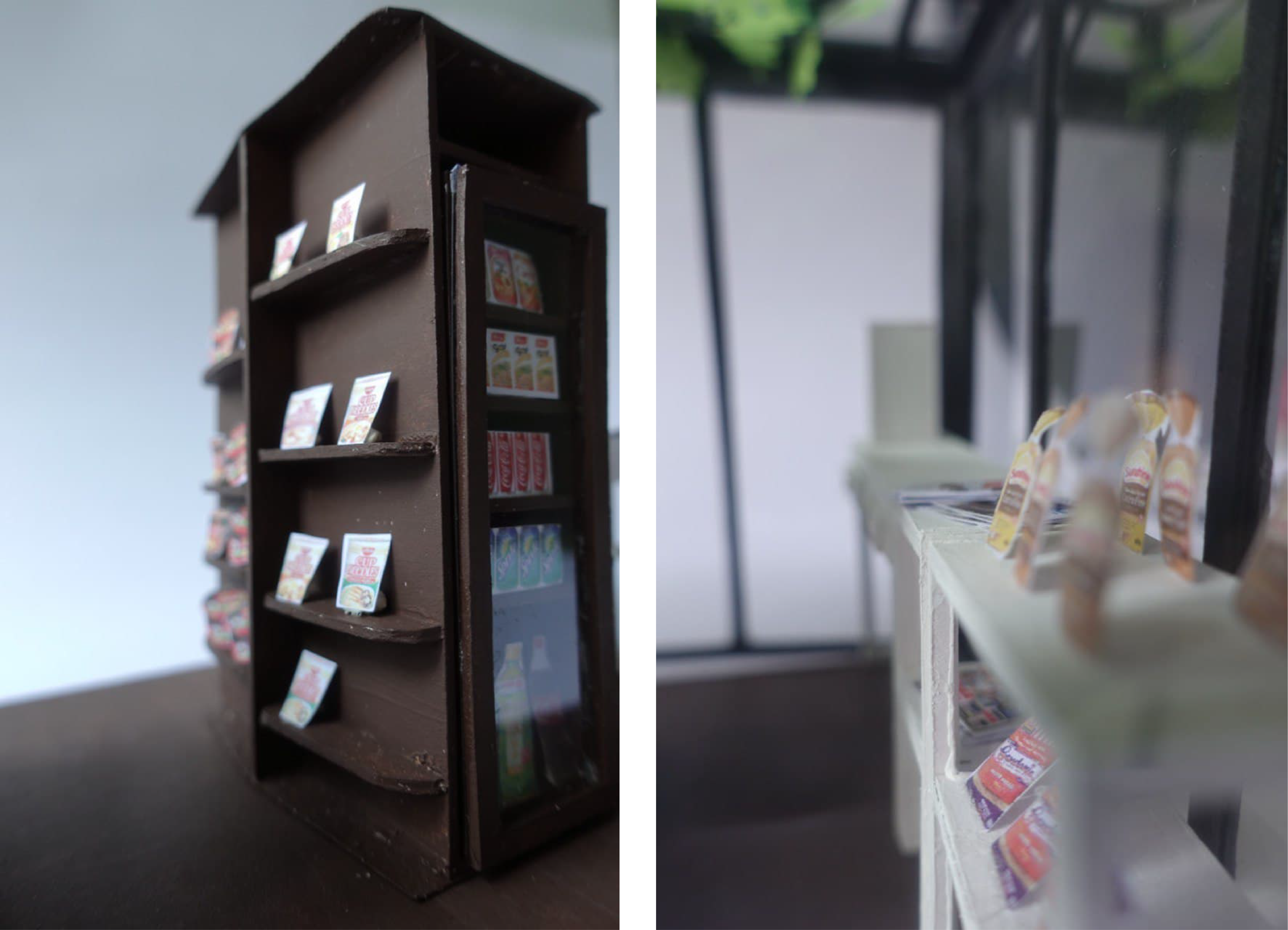
To help customers understand this new pricing concept easier, we have framed the shop layout to 2 different colour styles. We also have a signage located at the middle of the shop to inform users of the pricing tier.